How it works
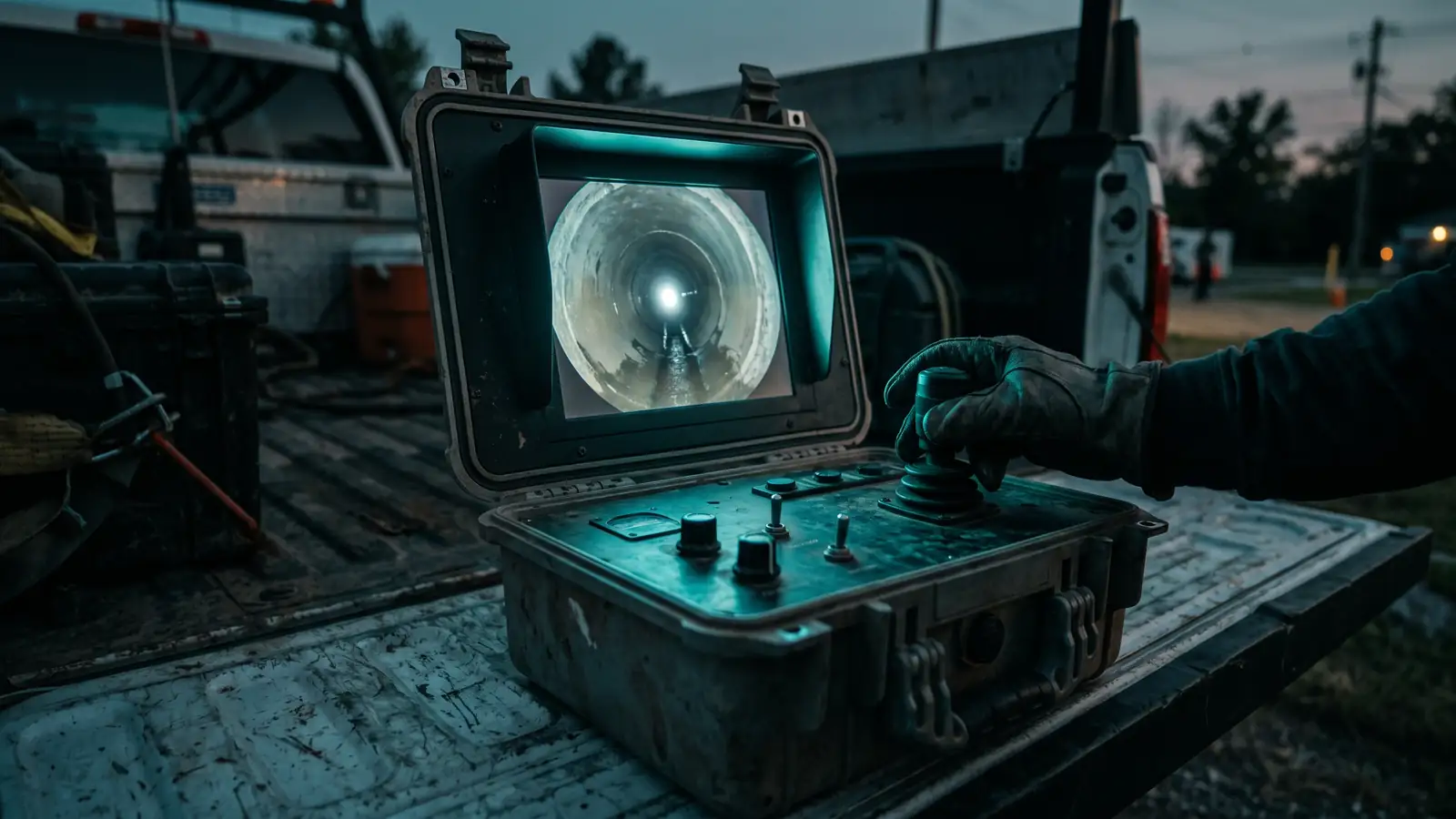
A lit camera on a flexible cable is fed through a cleanout and travels the pipe while a monitor shows the view. The run is recorded so you can watch it, share it and keep it.
What the camera looks for
The camera shows the pipe’s material, its condition and anything that should not be there. Each finding has a typical cause and a typical response.
- Roots entering at joints
- Cracks, breaks or holes
- Offset joints where sections have shifted
- Standing water that points to a sag
- Grease, scale or debris on the wall
- Connections and cleanouts
What the findings mean
A few roots at a joint may only need cutting. A cracked or offset pipe may call for lining. A collapse needs repair. Seeing the pipe lets you choose a response that fits, rather than guessing.
What you take away
You get the recording and a plain summary: where each finding sits, how serious it looks and what the options are. That makes quotes comparable and decisions easier.
- The video
- A written summary
- Marked locations on the surface where useful
Questions on this topic
Does the camera fix anything?
No, it shows what is there. Cleaning and repair are separate steps.
How long does it take?
Many residential lines take under an hour, depending on length and condition.