Stop adding water
Every flush, shower and load of laundry sends more water toward a line that cannot take it. Stop using sinks, toilets, showers and the washing machine until the line is cleared.
- Do not flush
- Pause the dishwasher and washer
- Tell everyone in the house
Keep people and pets away
Sewage carries bacteria and viruses. Keep children and pets out of the wet area, avoid touching it with bare skin and wear gloves and boots if you have to move through it.
- Gloves and boots if you must enter
- No bare skin contact
- Keep food and dishes away from the area
Protect what you can
Lift items off the floor where it is safe. Porous materials like carpet and drywall that touched sewage often cannot be saved, so photographs before cleanup are worth taking.
- Take photos and video before cleanup
- Move unaffected items to a dry room
- Keep a list of damaged belongings
Call for help and tell your insurer
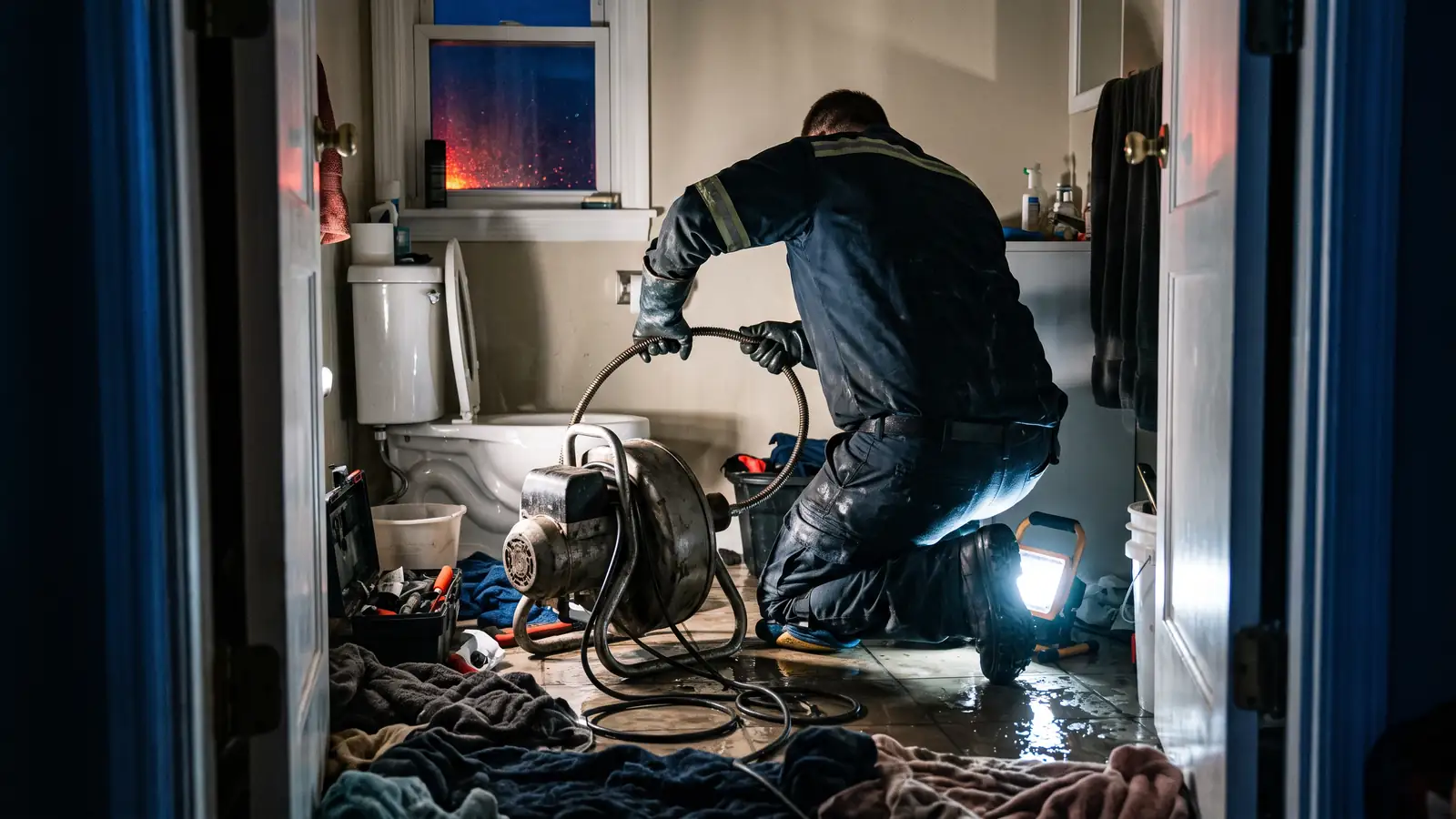
Describe what is happening on the phone. The emergency team stops the source and clears the line. Contact your insurer early, because coverage for sewer backups varies by policy.
- Ask what your policy covers
- Keep receipts
- Ask about a recorded camera inspection for your records
Questions on this topic
Can I clean up sewage myself?
A small spill on a hard floor can be cleaned with gloves and a disinfectant. Large spills and wet porous materials are best handled by a cleanup professional.
Why did it back up?
A blockage in the main line or in the city sewer is the usual cause. A camera inspection tells you which.