The idea
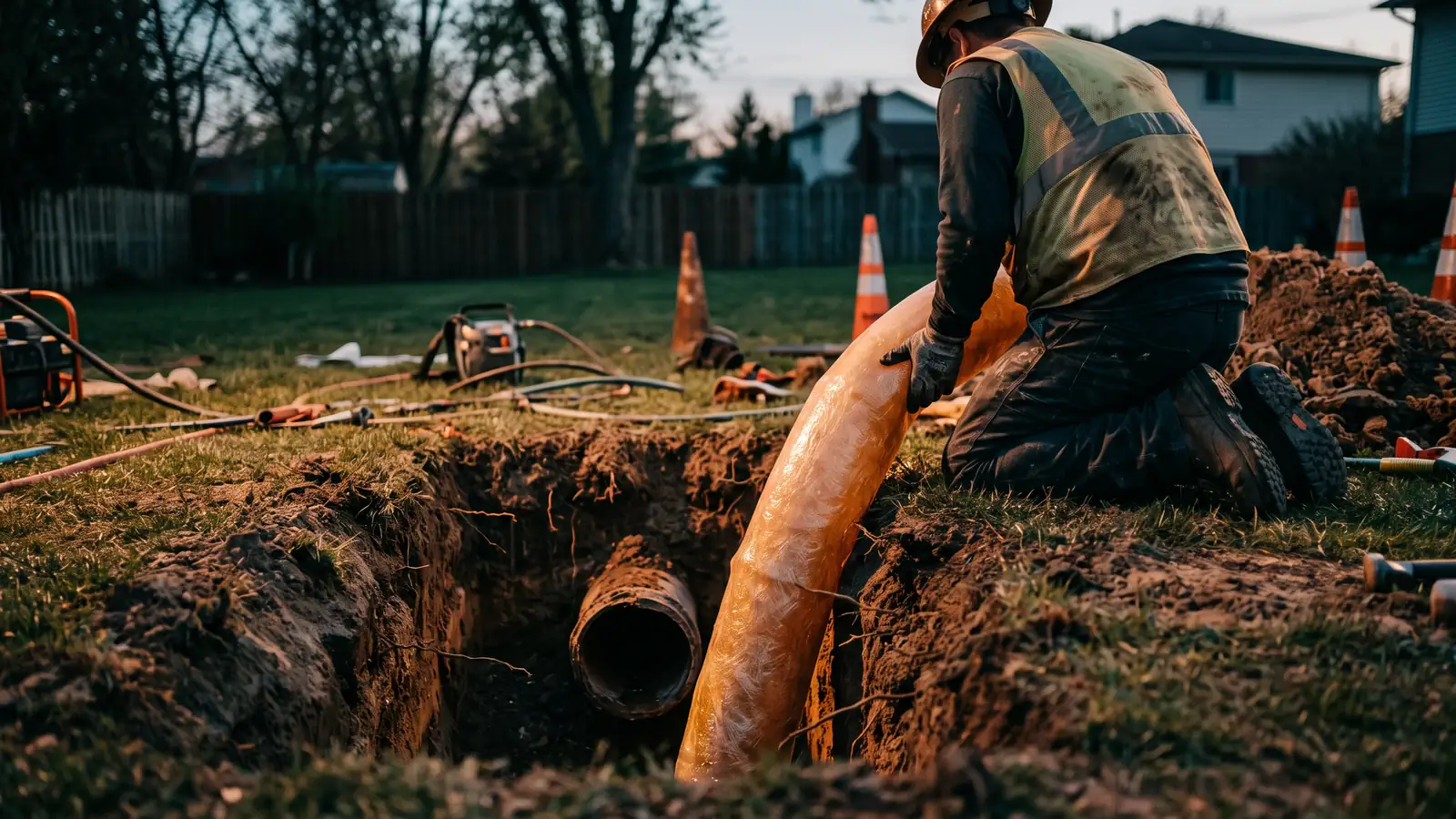
Trenchless repair fixes or replaces an underground pipe from small access points instead of digging a continuous trench. Cured-in-place pipe lining, or CIPP, installs a resin-soaked liner in the old pipe and hardens it into a new pipe inside.
The steps
Every lining job follows the same basic path. The camera and the cleaning decide whether the pipe can be lined at all.
- Camera inspection of the line
- Cleaning and root removal
- Installing the liner
- Curing with heat or light
- Reopening connections
- Final camera check
When digging is still needed
A collapsed pipe, a serious sag or a failed fitting may need a targeted dig, because a liner relies on the pipe holding its shape. Pipe bursting replaces a pipe that cannot be lined, and often needs only two small pits.
What to expect
Many residential lines take a day, depending on length and cure method. Water may be off for part of it. A camera check afterward is your proof the job worked.
- A realistic window after the inspection
- Notice before water is off
- The recording of the finished pipe
Questions on this topic
How long does a liner last?
Industry designs commonly cite around fifty years, but no repair can be promised for life. It depends on the pipe, the installation and the conditions.
Is lining a permanent fix?
It is a durable repair for pipe that can hold a liner. The camera shows whether yours can.