Where kitchens go wrong
Fat, starch and food solids go down the drain all service. The trap catches some, and the rest coats the line. The first sign is often a slow sink in the middle of a rush.
The emergency path
When a drain fails, the emergency team clears it, removes buildup and tells you what happened. It is the quickest route back to service, but a scheduled visit usually happens at a calmer moment than a crisis.
The prevention path
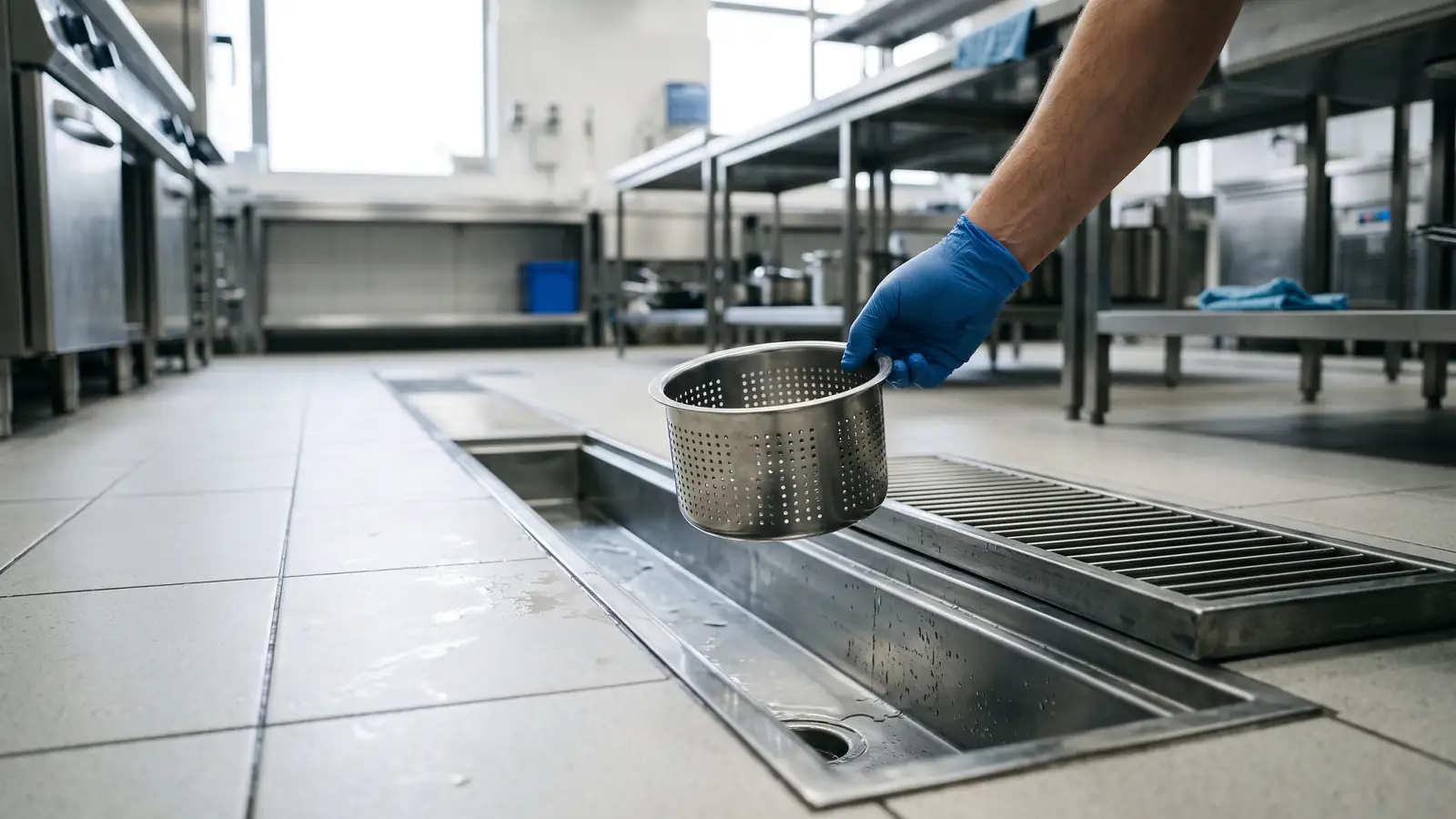
A program of trap service, line jetting and floor drain cleaning on a calendar keeps the line open. Records of each visit help with inspections and with spotting patterns.
- Trap pumping on a schedule
- Jetting of grease lines
- Floor drain sanitizing
- A written service log
Doing both
Most kitchens use both. The emergency team is the safety net, and the maintenance team is the plan. After an emergency, it is common to move to a program.
Questions on this topic
How often should a grease trap be cleaned?
Usage and trap size decide it, and local rules may set a minimum.
Can I avoid emergencies completely?
No one can promise that, but a program reduces them a lot.